“He who can destroy a thing, has the real control over it.” — Frank Herbert
Lessons from The Great Fire of Alexandria
- Event: The Great Fire of Alexandria
- Date: Approximately 48 BC
- Cause: Collateral damage during the siege of Julius Caesar
- Estimated Loss: Four hundred thousand unique papyrus scrolls and centuries of human knowledge
- Modern Lesson: Preservation requires suppression without collateral damage
The Day the Cloud Went Offline
Imagine the entire internet housed in just one building. Every book, every server, every piece of shared human history. In 48 BC, that was the Library of Alexandria. It wasn’t just a collection of books. It was the ancient world’s central server. According to the World History Encyclopedia, the Library of Alexandria housed the sum of human knowledge.
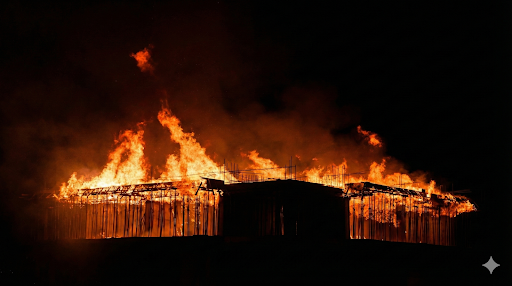
When Caesar’s harbor siege went sideways and the fire spread to the docks, there was no modern-day off-site backup. The loss wasn’t just physical. It was a permanent “data breach” for humanity. The lesson for 2026? Reliability and uptime are the core components of brand protection. Once the medium is destroyed, the story ends.
Key Takeaways
- Legacy Protection: Some assets are one-of-one. Protecting them is a matter of global legacy.
- The Water Paradox: In high-stakes environments, the cure (water) can be as destructive as the disease (fire).
- Reputation Insurance: Clean-agent fire suppression is more than just safety. It’s reputation insurance for your mission.
- Protecting the “New Alexandria”: Safeguarding data centers and AI infrastructure requires chemistry that leaves zero residue.
- Trust & Continuity: To navigate industry shifts requires a team that understands the original global standards.
The Modern Connection: Why the Cure is Sometimes the Disease
Even if Alexandria had modern water-based sprinklers, the result might have been the same. Fire turns scrolls to ash…water turns them to pulp. This is the Water Paradox. In sensitive zones such as data centers, museums, and research labs, we can’t afford collateral damage.
This is where Clean Agent Fire Suppression becomes non-negotiable. Our SF 1230™ Fire Protection Fluid is the modern answer to the Alexandria problem. It extinguishes fire at the molecular level, leaving no residue, no moisture, and no damage behind. It’s the ultimate “undo” button for a fire emergency.
The Legacy Lesson: Continuity is Everything
Fire safety isn’t just about putting out flames. It’s about what remains after the fire is gone. In Alexandria, the loss was permanent. For a modern enterprise, a fire that triggers a water sprinkler is a “total loss” event for the hardware. Clean agents ensure the fire is suppressed and that the mission and the trust behind the brand continue.
Protecting the New Standard of Science
As legacy products like 3M™ Novec 1230™ Fire Protection Fluid exit the market, the Great Fire of Alexandria serves as a stark reminder of why we need modern, clean agents to protect our history. To prevent system failure, you must ensure your suppression fluid is of the highest purity. As we discussed in our deep dive on Why Quality Assurance Defines the New Era of Clean-Agent Fire Protection, it all comes down to transparency and COA standards.
The National Archives notes that the challenge remains balancing fire safety with protection strategies that don’t destroy the collection. We provide the clarity and confidence you need to ensure your data centers and archives don’t become the next Alexandria.
Stay tuned for next week’s Fire Friday: The Parker Building Fire (NYC,1908) Fireproof Buildings: Why “fireproof” materials aren’t enough. You need active suppression.
Get in touch to protect your mission: https://standardfluids.com/contact/