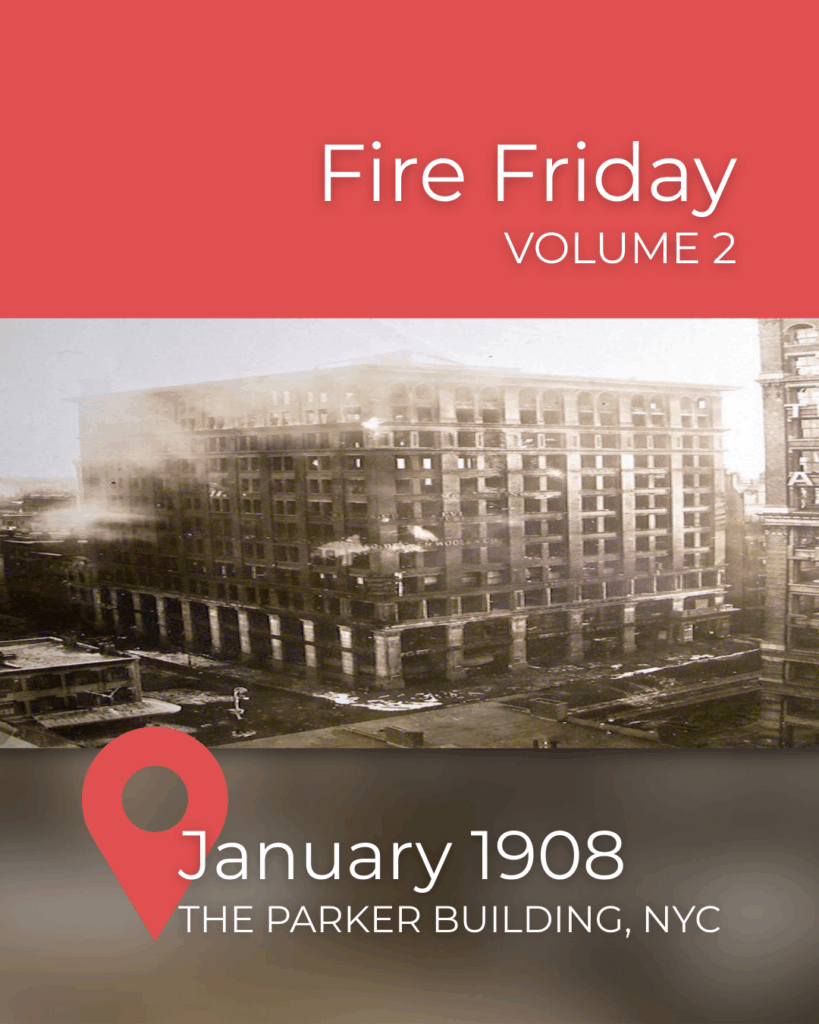
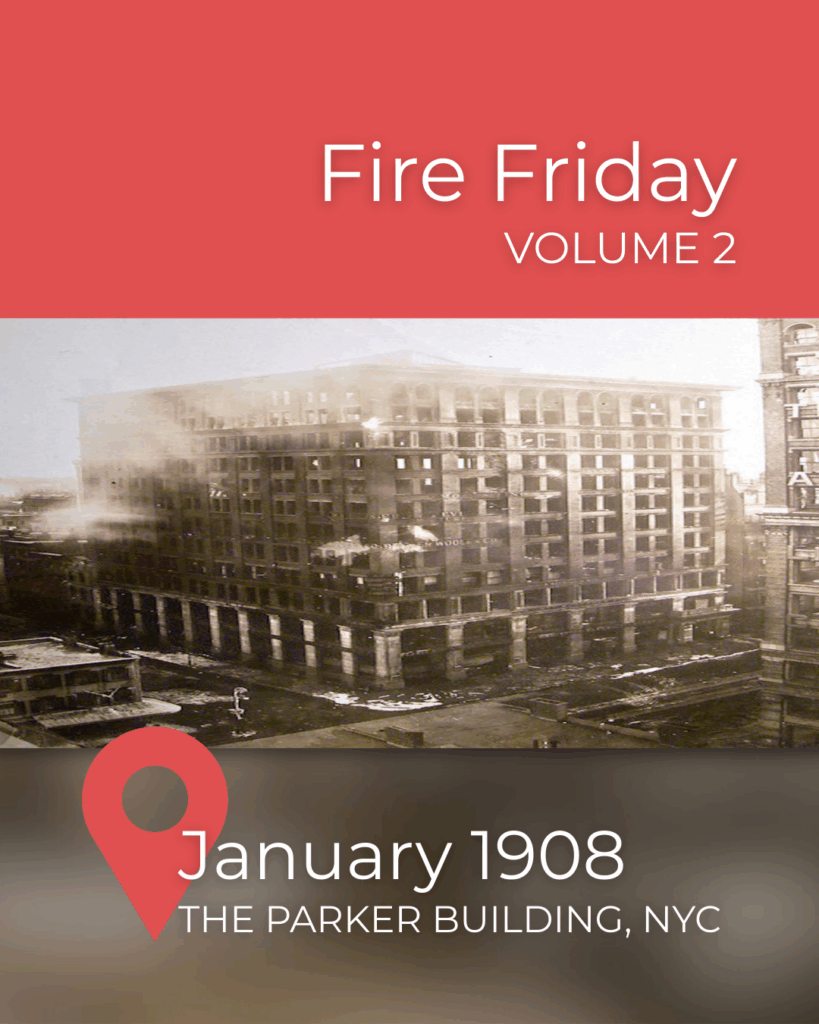
The building stood, but the business died. This hard lesson from 1908 changed modern fire engineering forever.
Quick Look: The Historical Impact
- Event: The Parker Building Fire in New York City
- Date: January 10, 1908
- The Claim: Owners advertised it as the most fireproof building in New York City.
- The Reality: The structure survived while the contents became a total loss.
- Modern Lesson: Passive protection, like fireproof walls, fails without active suppression.
The Titanic of Buildings
In 1908, engineers considered the Parker Building the gold standard of safety. Owners built it with steel and terra cotta and marketed the structure as indestructible. However, the National Fire Protection Association (NFPA) reports that when a fire broke out on the sixth floor, the building acted like a giant oven. The fireproof structure trapped the heat inside. Temperatures rose so high that the steel warped and the floors collapsed.
The Parker Building proved a sobering truth that Standard Fluids continues to share in 2026. A building might be fireproof, but its contents never are. Whether you protect 1908 textiles or 2026 AI server racks, the structure only serves as a shell. The real value exists inside.
Key Takeaways
- Active versus Passive Protection: Passive materials prevent the building from falling while active suppression prevents the contents from burning.
- Reputation Insurance: True protection safeguards the mission and reputation of the brand rather than just the real estate.
- The High Heat Trap: Buildings without active suppression trap heat and increase the damage to sensitive equipment.
- Infrastructure Protection: Organizations cannot risk downtime for data centers and research labs.
- Continuity of Support: Navigating safety transitions requires a team with deep scientific and global application experience.
The Modern Connection: Beyond the Walls
Today, we do not rely on the hope of fireproof materials alone. We use active and intelligent systems. As legacy brands like 3M™ Novec 1230™ Fire Protection Fluid exit the market, customers face an industry-wide transition. Standard Fluids provides clarity and confidence during these industry shifts.
Our SF 1230 fluid acts as the ultimate active responder. Unlike water sprinklers, which destroy what the fire misses, SF 1230 fluid suppresses fire at the molecular level. It leaves zero residue behind. It provides the definitive solution for protecting the assets of the modern age.
The Legacy Lesson: Uptime is Brand Protection
Reliability and uptime represent the core components of brand protection. The Parker Building owners believed they were safe because they used stone walls. They learned too late that business continuity depends on active suppression. In the modern era, if your data goes down, your brand goes down. Clean agents help ensure that a localized fire does not become a total loss event.
Protecting the New Standard of Science
The Parker Building fire prompted the American Society of Civil Engineers (ASCE) to reconsider structural safety. This led to more rigorous testing protocols. Standard Fluids applies that same testing rigor today.
As we discussed in our recent blog, Trust, Transition, and Technology, brand trust comes from the team and the science behind the molecule. You need more than just a fireproof room to safeguard AI infrastructure or historical archives. You need a partner that offers transparency in COA standards and global expertise.
Stay tuned for next week’s Fire Friday: The Great Fire of Edo (Japan, 1657): Urban Density: Preventing spread in densely packed server racks/cities.
Contact us today to move beyond fireproof and into total protection: https://standardfluids.com/contact/