

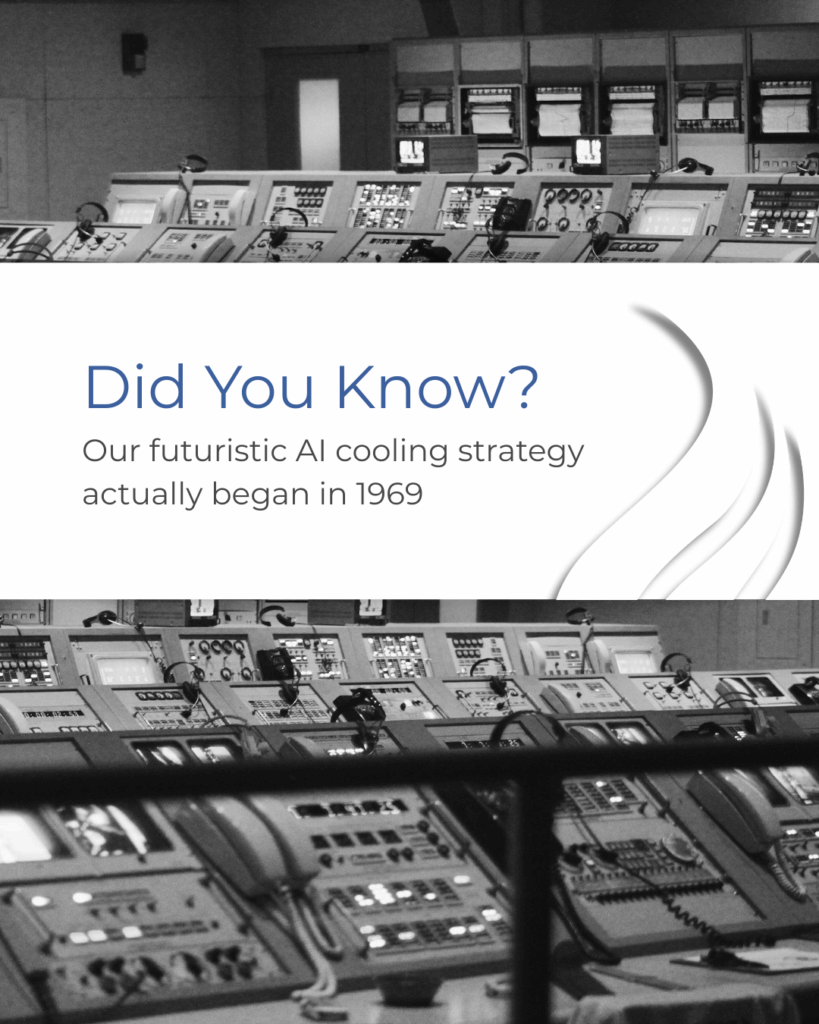
Immersion cooling is often discussed as a “new” solution for the AI boom. However, its roots trace back to the pioneers of supercomputing.
As data center densities skyrocket, success depends on partnering with the team that has been there since the first chip was submerged.
Listen to this episode of The Splashcast to hear why Standard Fluids is the team of choice for 3M™ replacement fluids.
Key Takeaways
- Immersion cooling for computers began as early as 1969 with IBM’s breakthroughs in boiling fluids to cool chips.
- The thermal limits of modern high-heat chips drive the shift back to liquid. However, air can no longer manage these intense workloads.
- Two-phase immersion cooling allows for extreme density. For example, 500MW facilities in high-rise environments.
- The Seamless 3M™ Novec™ Replacement: SF 649™ Engineered Fluid and SF 7100™ Engineered Fluid provide the exact molecular stability required for facilities to seamlessly transition from legacy products.
The Legacy of Liquid Cooling
In 1969, IBM successfully used fluorinated fluids to cool chips. This practice continued through the supercomputing era with companies like Cray Research. Today, as we hit the thermal limits of air-cooled AI infrastructure, the industry is returning to these proven liquid methods.
The AI Boom and Modern Infrastructure
Today’s AI workloads require extreme thermal management. Standard Fluids provides the direct successors to the legacy fluids that powered the first supercomputers. While budget-grade resellers offer “near-equivalents,” Standard Fluids is led by the original engineers who understand the delicate balance of material compatibility. Get in touch today: https://standardfluids.com/contact/