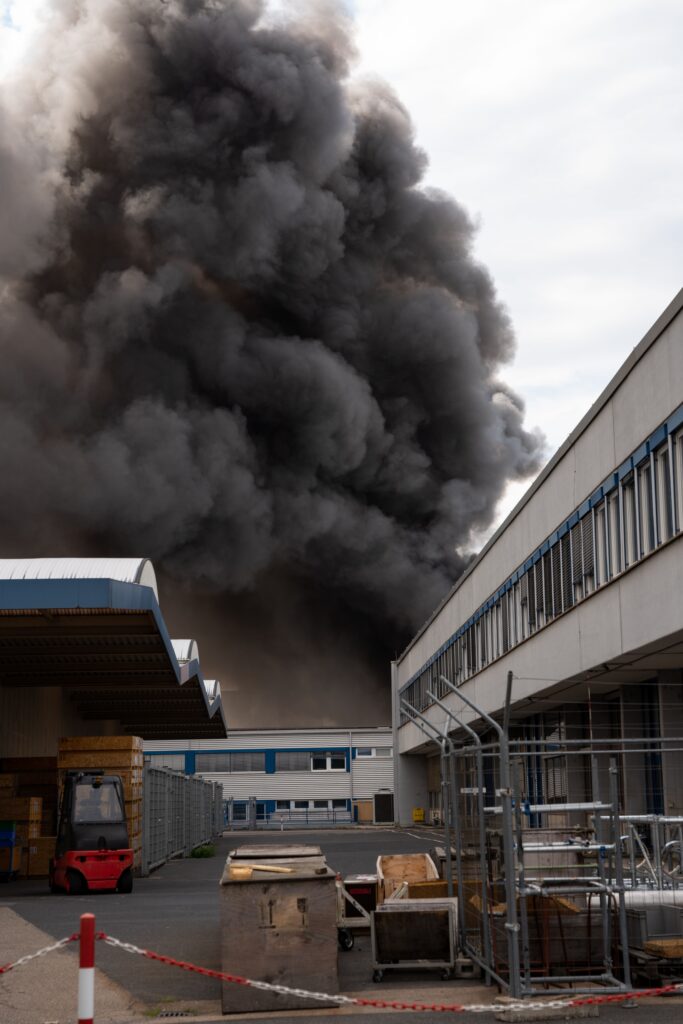
On March 10, 2021, a fire broke out in OVHcloud’s SBG2 data center in Strasbourg, France. By the time firefighters contained the blaze, the facility was a total loss. Four data centers on the campus were shut down. Thousands of websites went offline. Customer data was permanently destroyed for those without adequate backups. The incident stands as a modern cautionary tale about the catastrophic consequences of inadequate fire protection in mission-critical facilities.
Quick Look: The Historical Impact
OVHcloud SBG2 Data Center Fire
- Event: OVHcloud SBG2 Data Center Fire
- Date: March 10, 2021
- The Cause: Electrical failure in UPS room without adequate fire suppression
- The Result: Total facility loss, 12,000 servers destroyed, customer data permanently lost
Modern Lesson: Clean agent fire suppression protects critical infrastructure without water damage
What Happened at OVHcloud
Initial reports suggested the fire originated in a UPS (uninterruptible power supply) room. However, the exact ignition source was never definitively confirmed. What is certain is that once the fire started, it spread fast. The data center, which housed approximately 12,000 servers, was not equipped with adequate fire suppression systems to contain such an event.
Traditional water-based sprinkler systems, while standard in many buildings, present serious problems in data centers. Water causes immediate and irreversible damage to electronics. In fact, even if equipment isn’t directly destroyed by fire, water contamination often makes recovery impossible. OVHcloud’s facility design left critical infrastructure vulnerable to both fire damage and suppression system damage.
The aftermath was severe. Major customers included government agencies and cloud service providers. These businesses lost access to their infrastructure. Some lost data permanently. The financial impact rippled through OVH’s business and damaged customer trust. Independent analysis from datacenter industry analysts estimated damages in the hundreds of millions of euros.
The Clean Agent Alternative
Modern data centers cannot afford to use water-based fire suppression in server rooms. The solution is clean agent systems using engineered fluids specifically designed for electronics protection. Standard Fluids™ SF 1230™ Fire Protection Fluid represents the gold standard in clean agent technology.
SF 1230 fluid is electrically non-conductive, leaves no residue, and extinguishes fires rapidly through heat absorption and chemical flame suppression. When a fire is detected, the system floods the protected space with SF 1230 vapor, suppressing combustion within seconds while causing zero damage to sensitive electronics.
The contrast with water is stark. Water damages equipment immediately upon contact. SF 1230 fluid protects equipment while extinguishing the fire. After a suppression event, technicians can ventilate the space, inspect for damage from the fire itself (typically minimal with rapid suppression), and return to operation without replacing water-damaged components.
Why SF 1230 Outperforms Legacy Systems
SF 1230 fluid is a direct replacement for discontinued legacy products, offering equivalent fire suppression performance with proven reliability and US-based supply chain advantages. The fluid works through a combination of mechanisms that provide superior protection.
Physical cooling absorbs heat from the fire, lowering temperatures below the combustion threshold. This is particularly effective for electrical fires where heat is concentrated in specific components.
Chemical suppression interrupts the combustion reaction itself, preventing fire spread even in oxygen-rich environments. This dual-mode operation makes SF 1230 fluid exceptionally effective across various fire scenarios commonly encountered in data centers.
The safety profile is critical for occupied spaces. SF 1230 fluid is non-toxic at design concentrations, meaning personnel can safely evacuate through protected areas during suppression events. This safety profile has been validated through extensive testing documented in NFPA 2001 standards. This is essential for facilities with 24/7 operations where staff may be present when fire is detected. We’ve discussed why quality assurance defines modern clean agent fire protection in previous articles.
Lessons from Strasbourg
The OVHcloud fire reinforced several critical lessons for data center operators.
Fire protection cannot be an afterthought. Mission-critical facilities require robust, properly maintained fire suppression systems designed specifically for electronics protection. Cost-cutting on fire safety creates catastrophic risk.
Speed matters in detection and suppression. Why? Because early detection combined with rapid suppression minimizes damage. Every second counts when fire threatens infrastructure worth millions of dollars and that supports critical business operations.
Water is not an option. Traditional sprinkler systems may satisfy building codes. They destroy the very equipment they’re meant to protect in data center applications. Clean agents like SF 1230 fluid represent the only responsible choice.
Designing Modern Fire Protection
Implementing clean agent fire suppression with SF 1230 fluid involves several components working together. Early warning smoke detection provides the fastest possible alert. Properly designed distribution systems ensure adequate fluid concentration throughout the protected volume. Regular testing and maintenance verify system readiness.
Standard Fluids works with fire protection engineers and system integrators to ensure proper implementation. The goal extends beyond code compliance to genuine protection of irreplaceable infrastructure and data. Our article on designing future-proof fire protection explores these principles in depth.
The Cost of Inaction
OVHcloud’s losses extended far beyond the physical facility. Customer relationships were damaged. Reputations suffered. Business continuity shattered. The fire is a case study in the business risks of inadequate fire protection.
Compare this to facilities protected by properly designed clean agent systems. When fire is detected, suppression occurs within seconds. Equipment remains operational or requires minimal recovery time. Business continuity is maintained. The investment in proper fire protection pays for itself many times over in a single incident.
Moving Forward
Every data center operator should examine their fire protection systems with fresh eyes after OVHcloud.
Ask these three questions:
- Are detection systems truly adequate?
- Is suppression capability sufficient for the actual risks present?
- Are clean agents like SF 1230 fluid deployed where they’re needed most?
Fire risk in data centers is real. The consequences of inadequate protection are catastrophic. Standard Fluids’ SF 1230 Fire Protection Fluid provides proven protection that allows businesses to focus on operations rather than disaster recovery.
Questions about clean agent fire suppression or need an audit of your facility? Get in touch: https://standardfluids.com/contact/