

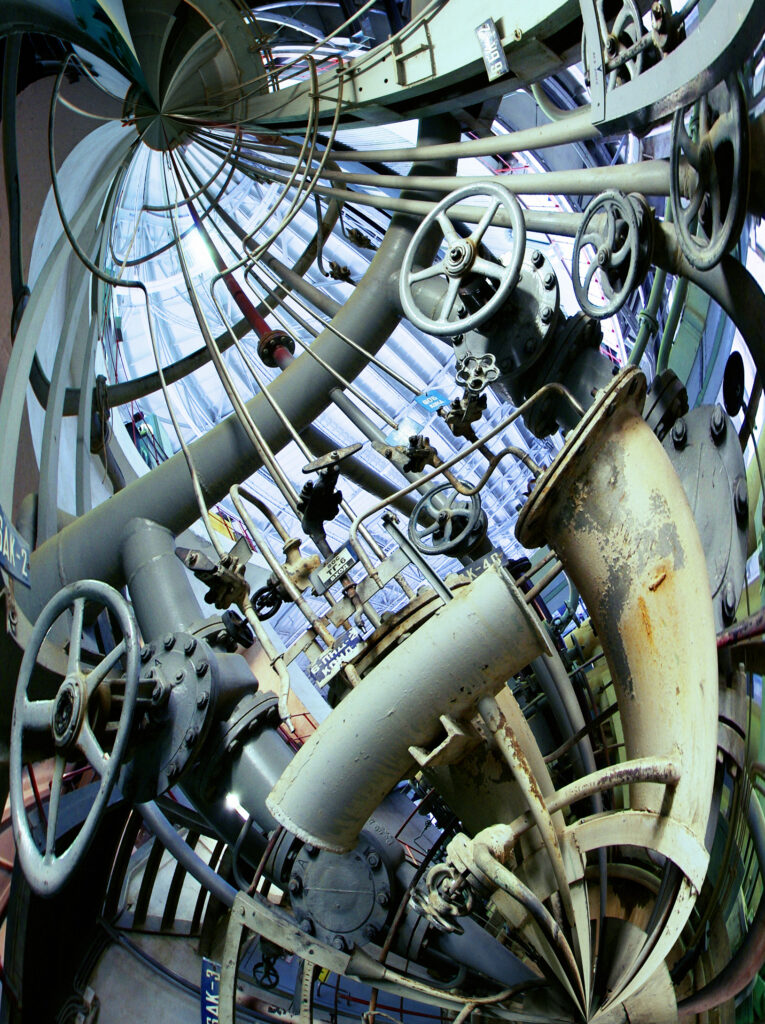
2PIC Tuesday, Vol. 13: The Complexity Index – Why Air, DTC, and Single-Phase Cooling Fail at Scale
Title: 2PIC Tuesday, Vol. 13: The Complexity Index – Ranking Cooling Methods by Failure Points
Meta Description (155 chars): Air cooling has 50+ failure points. Direct-to-chip has 100+. Single-phase immersion has dozens. Two-phase immersion cooling eliminates complexity at the source.
Focus Keyphrase: cooling method complexity comparison
Link:
Data center operators face a simple reality: every additional component in your cooling infrastructure is a potential failure point. Every pump, fan, cold plate, pipe fitting, and control sensor represents maintenance cost, reliability risk, and operational complexity.
The industry has politely discussed “trade-offs” between cooling methods for years. That politeness obscures a fundamental truth: most cooling approaches fail because they’re fundamentally too complex for the thermal demands of modern AI and HPC workloads.
Let’s examine why.
The Complexity Framework
We’ve developed a straightforward metric: the Complexity Index. This measures the number of active mechanical components, potential leak points, flow distribution challenges, and control system dependencies for each cooling method.
The results are stark:
Air Cooling: Complexity Index = High (50+ failure points)
- CRAC/CRAH units with compressors, fans, and condensers
- Dozens of fans per rack
- Airflow management (hot aisle containment, perforated tiles, dampers)
- Temperature and humidity sensors throughout facility
- Building management system integration
- Constant rebalancing as equipment changes
Direct-to-Chip (DTC): Complexity Index = Very High (100+ failure points)
- Cold plates for every high-power component
- Distribution manifolds with dozens of connections per rack
- Pumps (often redundant pairs)
- Heat exchangers
- Fluid chemistry management
- Leak detection systems
- Flow balancing across hundreds of cold plates
- Pressure monitoring
- Regular maintenance on seals and fittings
Single-Phase Immersion: Complexity Index = Medium (30+ failure points)
- High-capacity circulation pumps
- External heat exchangers
- Flow distribution system within tanks
- Filtration systems
- Fluid chemistry monitoring
- Temperature control across zones
- Viscosity management as fluid ages
Two-Phase Immersion Cooling (2PIC): Complexity Index = Low (5-10 failure points)
- Passive vapor condensation
- Gravity-driven fluid return
- External heat rejection (standard facility systems)
- Minimal mechanical components
- Self-regulating through physics
The numbers tell the story before we even discuss thermal performance.
Where Air Cooling Fails
Air cooling worked adequately when chips dissipated 150W. At 300W per chip and 50kW per rack, air cooling doesn’t just become inefficient. It becomes impossible.
The failure modes multiply:
- Hot spots: Airflow distribution across densely packed servers creates thermal gradients
- Fan failures: Each server has 6-12 fans. Multiply by servers per rack and racks per data center
- Efficiency losses: Moving air requires substantial energy. The power to cool approaches the power to compute
- Space constraints: Maintaining adequate airflow requires spacing that limits rack density
- Acoustic issues: High-velocity airflow creates noise problems
Data centers compensate by over-provisioning cooling capacity, which drives up both capital and operational expenses. The complexity spiral continues as operators add more sensors, controls, and redundant systems to manage the fundamental limitations of air as a heat transfer medium.
Air cooling fails because air has terrible thermal properties. Adding more fans and more complex airflow management cannot overcome basic physics. The American Society of Heating, Refrigerating and Air-Conditioning Engineers (ASHRAE) has extensively documented the thermal limitations of air cooling for high-density computing environments.
Why Direct-to-Chip Creates Maintenance Nightmares
Direct-to-chip cooling sounds elegant: put the cooling exactly where the heat is generated. The reality involves hundreds of leak points, constant maintenance, and field failures that shut down entire racks.
Every server requires:
- Cold plates bonded to CPUs and GPUs (8-12 per server)
- Quick-disconnect fittings (16-24 per server)
- Manifold connections
- Perfect seal integrity under thermal cycling
Multiply those numbers by servers per rack (40+) and racks per data center (thousands). You’ve created a system with thousands of potential leak points that must maintain seal integrity while experiencing constant temperature changes.
The flow distribution challenge compounds everything. Ensuring equal flow rates across dozens of cold plates in series requires precise balancing. Unequal flow creates thermal performance variations. Operators spend significant time rebalancing systems as equipment changes or as pump performance degrades.
DTC systems also require regular maintenance:
- Seal inspection and replacement
- Pump service
- Heat exchanger cleaning
- Flow sensor calibration
- Leak detection system verification
This maintenance cannot be deferred. A single leak can damage millions of dollars of equipment. The operational overhead becomes substantial.
Direct-to-chip cooling fails because complexity scales linearly with compute density. More chips require more cold plates, more connections, and more failure points.
Single-Phase Immersion’s Hidden Costs
Single-phase immersion cooling eliminates many air cooling problems. Submerging servers in dielectric fluid provides better thermal performance than air. However, as we detailed in our comparison of 2PIC vs. single-phase immersion, single-phase systems introduce their own complexity through the requirement for continuous fluid circulation.
High-capacity pumps must run constantly. These pumps consume significant energy, require regular maintenance, and represent single points of failure. Pump failure means immediate thermal problems across the entire tank.
Flow distribution within tanks creates engineering challenges. Dead zones with poor circulation develop hot spots. Operators must carefully design internal baffling and flow paths to ensure adequate fluid velocity across all components.
The fluid itself requires ongoing management. Many single-phase fluids have relatively high viscosity that increases with temperature. Circulating viscous fluid requires more pumping power. Fluid degradation over time affects both thermal performance and material compatibility.
Single-phase immersion fails to deliver its full potential because it trades airflow complexity for fluid circulation complexity. The mechanical dependence remains.
Two-Phase Immersion: Physics Does the Work
Standard Fluids™ SF 649™ Engineered Fluid and Standard Fluids™ SF 5056™ Engineered Fluid operate on fundamentally different principles. Phase change through boiling provides the heat transfer mechanism. The fluid’s latent heat of vaporization absorbs massive energy during the liquid-to-vapor transition. As our team discussed in Episode 5 of the Splashcast podcast, the purity and quality of the fluid directly impact long-term system performance.
This eliminates mechanical complexity:
- No forced circulation needed: Vapor rises naturally through buoyancy
- No flow distribution challenges: Every surface has access to the same boiling mechanism
- No balancing required: Heat transfer occurs wherever there’s sufficient heat flux
- Minimal pumping: External heat rejection uses standard building systems
The system is self-regulating. Higher heat loads increase boiling rate, which increases vapor production and heat removal. Lower heat loads reduce boiling. The fluid automatically matches cooling capacity to thermal demand without control systems or active management.
Failure modes are minimal:
- Condenser fouling (preventable with basic maintenance)
- Fluid contamination (avoided with proper initial system preparation)
- External heat rejection failure (same risk as any cooling method)
That’s it. Compare five potential failure points to the hundreds in DTC systems or dozens in single-phase immersion.
The Reliability Argument
Complexity directly correlates with failure probability. Systems with more components fail more often. This relationship is well-established in reliability engineering and documented by organizations like the NSAI, which has published extensive research on system failure modes and mean time between failures (MTBF) calculations.
Mean Time Between Failures (MTBF) for complex cooling systems:
- Air cooling: Frequent fan replacements, CRAC/CRAH service requirements
- Direct-to-chip: Regular seal maintenance, pump service, leak repairs
- Single-phase immersion: Pump maintenance, heat exchanger service
- Two-phase immersion: Minimal maintenance, primarily preventive inspection
The operational impact extends beyond maintenance costs. Cooling system failures directly affect compute availability. Every hour of downtime due to thermal problems represents lost revenue and damaged SLA compliance.
Two-phase immersion cooling with proven fluids from Standard Fluids provides reliability advantages that stem from fundamental simplicity. Fewer components mean fewer failures. Passive operation means no mechanical wear on critical systems within the tank.
Total Cost of Ownership Reality
Complexity costs money across multiple dimensions:
Capital Expenses:
- Air: Massive HVAC infrastructure
- DTC: Expensive cold plates, manifolds, pumps, and controls
- Single-phase: High-capacity circulation pumps and associated infrastructure
- 2PIC: Simpler system architecture with fewer mechanical components
Operational Expenses:
- Air: High energy consumption for fan operation
- DTC: Moderate energy for pumping plus significant maintenance labor
- Single-phase: Pumping energy plus fluid management
- 2PIC: Minimal pumping energy, low maintenance requirements
Maintenance Costs:
- Air: Constant fan replacement, HVAC service
- DTC: Labor-intensive seal inspection, pump service, leak repairs
- Single-phase: Regular pump and heat exchanger maintenance
- 2PIC: Preventive inspection, minimal intervention required
Downtime Risk:
- Air: Thermal throttling during HVAC issues
- DTC: Rack-level shutdowns from leak events
- Single-phase: Tank-level thermal problems from pump failure
- 2PIC: Graceful degradation, high fault tolerance
The total cost of ownership for two-phase immersion cooling becomes favorable quickly, especially as compute density increases. The complexity reduction translates directly to operational savings.
Conclusion: Simplicity Wins
The data center industry has spent decades adding complexity to cooling systems in attempts to manage increasing thermal loads. That approach has reached its limit.
Air cooling cannot handle 50kW+ racks regardless of how sophisticated the airflow management becomes. Direct-to-chip cooling cannot escape the maintenance burden of thousands of connections. Single-phase immersion cannot eliminate the energy cost and reliability concerns of continuous mechanical circulation.
Two-phase immersion cooling with SF 649 fluid and SF 5056 fluid succeeds because it leverages physics rather than fighting it. Boiling provides superior heat transfer. Natural convection provides circulation. Gravity provides fluid return. The system requires minimal mechanical intervention.
Lower complexity means higher reliability, lower maintenance costs, reduced energy consumption, and better long-term economics. For data centers deploying AI and HPC infrastructure that will operate for years, these advantages compound over time.
The Complexity Index provides a clear framework for evaluating cooling methods. When you count the failure points, the answer becomes obvious.
Standard Fluids engineered fluids enable the simplest, most reliable cooling architecture available for next-generation data centers. Learn about our products: standardfluids.com/products
Title: 2PIC Tuesday, Vol. 13: The Complexity Index – Ranking Cooling Methods by Failure Points
Meta Description (155 chars): Air cooling has 50+ failure points. Direct-to-chip has 100+. Single-phase immersion has dozens. Two-phase immersion cooling eliminates complexity at the source.
Focus Keyphrase: cooling method complexity comparison
Link:
Data center operators face a simple reality: every additional component in your cooling infrastructure is a potential failure point. Every pump, fan, cold plate, pipe fitting, and control sensor represents maintenance cost, reliability risk, and operational complexity.
The industry has politely discussed “trade-offs” between cooling methods for years. That politeness obscures a fundamental truth: most cooling approaches fail because they’re fundamentally too complex for the thermal demands of modern AI and HPC workloads.
Let’s examine why.
The Complexity Framework
We’ve developed a straightforward metric: the Complexity Index. This measures the number of active mechanical components, potential leak points, flow distribution challenges, and control system dependencies for each cooling method.
The results are stark:
Air Cooling: Complexity Index = High (50+ failure points)
- CRAC/CRAH units with compressors, fans, and condensers
- Dozens of fans per rack
- Airflow management (hot aisle containment, perforated tiles, dampers)
- Temperature and humidity sensors throughout facility
- Building management system integration
- Constant rebalancing as equipment changes
Direct-to-Chip (DTC): Complexity Index = Very High (100+ failure points)
- Cold plates for every high-power component
- Distribution manifolds with dozens of connections per rack
- Pumps (often redundant pairs)
- Heat exchangers
- Fluid chemistry management
- Leak detection systems
- Flow balancing across hundreds of cold plates
- Pressure monitoring
- Regular maintenance on seals and fittings
Single-Phase Immersion: Complexity Index = Medium (30+ failure points)
- High-capacity circulation pumps
- External heat exchangers
- Flow distribution system within tanks
- Filtration systems
- Fluid chemistry monitoring
- Temperature control across zones
- Viscosity management as fluid ages
Two-Phase Immersion Cooling (2PIC): Complexity Index = Low (5-10 failure points)
- Passive vapor condensation
- Gravity-driven fluid return
- External heat rejection (standard facility systems)
- Minimal mechanical components
- Self-regulating through physics
The numbers tell the story before we even discuss thermal performance.
Where Air Cooling Fails
Air cooling worked adequately when chips dissipated 150W. At 300W per chip and 50kW per rack, air cooling doesn’t just become inefficient. It becomes impossible.
The failure modes multiply:
- Hot spots: Airflow distribution across densely packed servers creates thermal gradients
- Fan failures: Each server has 6-12 fans. Multiply by servers per rack and racks per data center
- Efficiency losses: Moving air requires substantial energy. The power to cool approaches the power to compute
- Space constraints: Maintaining adequate airflow requires spacing that limits rack density
- Acoustic issues: High-velocity airflow creates noise problems
Data centers compensate by over-provisioning cooling capacity, which drives up both capital and operational expenses. The complexity spiral continues as operators add more sensors, controls, and redundant systems to
- Seal inspection and replacement
- Pump service
- Heat exchanger cleaning
- Flow sensor calibration
- Leak detection system verification
This maintenance cannot be deferred. A single leak can damage millions of dollars of equipment. The operational overhead becomes substantial.
Direct-to-chip cooling fails because complexity scales linearly with compute density. More chips require more cold plates, more connections, and more failure points.
Single-Phase Immersion’s Hidden Costs
Single-phase immersion cooling eliminates many air cooling problems. Submerging servers in dielectric fluid provides better thermal performance than air. However, single-phase systems introduce their own complexity through the requirement for continuous fluid circulation.
High-capacity pumps must run constantly. These pumps consume significant energy, require regular maintenance, and represent single points of failure. Pump failure means immediate thermal problems across the entire tank.
Flow distribution within tanks creates engineering challenges. Dead zones with poor circulation develop hot spots. Operators must carefully design internal baffling and flow paths to ensure adequate fluid velocity across all components.
The fluid itself requires ongoing management. Many single-phase fluids have relatively high viscosity that increases with temperature. Circulating viscous fluid requires more pumping power. Fluid degradation over time affects both thermal performance and material compatibility.
Single-phase immersion fails to deliver its full potential because it trades airflow complexity for fluid circulation complexity. The mechanical dependence remains.
Two-Phase Immersion: Physics Does the Work
Standard Fluids™ SF 649™ Engineered Fluid and Standard Fluids™ SF 5056™ Engineered Fluid operate on fundamentally different principles. Phase change through boiling provides the heat transfer mechanism. The fluid’s latent heat of vaporization absorbs massive energy during the liquid-to-vapor transition.
This eliminates mechanical complexity:
- No forced circulation needed: Vapor rises naturally through buoyancy
- No flow distribution challenges: Every surface has access to the same boiling mechanism
- No balancing required: Heat transfer occurs wherever there’s sufficient heat flux
- Minimal pumping: External heat rejection uses standard building systems
The system is self-regulating. Higher heat loads increase boiling rate, which increases vapor production and heat removal. Lower heat loads reduce boiling. The fluid automatically matches cooling capacity to thermal demand without control systems or active management.
Failure modes are minimal:
- Condenser fouling (preventable with basic maintenance)
- Fluid contamination (avoided with proper initial system preparation)
- External heat rejection failure (same risk as any cooling method)
That’s it. Compare five potential failure points to the hundreds in DTC systems or dozens in single-phase immersion.
The Reliability Argument
Complexity directly correlates with failure probability. Systems with more components fail more often. This relationship is well-established in reliability engineering.
Mean Time Between Failures (MTBF) for complex cooling systems:
- Air cooling: Frequent fan replacements, CRAC/CRAH service requirements
- Direct-to-chip: Regular seal maintenance, pump service, leak repairs
- Single-phase immersion: Pump maintenance, heat exchanger service
- Two-phase immersion: Minimal maintenance, primarily preventive inspection
The operational impact extends beyond maintenance costs. Cooling system failures directly affect compute availability. Every hour of downtime due to thermal problems represents lost revenue and damaged SLA compliance.
Two-phase immersion cooling with proven fluids from Standard Fluids provides reliability advantages that stem from fundamental simplicity. Fewer components mean fewer failures. Passive operation means no mechanical wear on critical systems within the tank.
Total Cost of Ownership Reality
Complexity costs money across multiple dimensions:
Capital Expenses:
- Air: Massive HVAC infrastructure
- DTC: Expensive cold plates, manifolds, pumps, and controls
- Single-phase: High-capacity circulation pumps and associated infrastructure
- 2PIC: Simpler system architecture with fewer mechanical components
Operational Expenses:
- Air: High energy consumption for fan operation
- DTC: Moderate energy for pumping plus significant maintenance labor
- Single-phase: Pumping energy plus fluid management
- 2PIC: Minimal pumping energy, low maintenance requirements
Maintenance Costs:
- Air: Constant fan replacement, HVAC service
- DTC: Labor-intensive seal inspection, pump service, leak repairs
- Single-phase: Regular pump and heat exchanger maintenance
- 2PIC: Preventive inspection, minimal intervention required
Downtime Risk:
- Air: Thermal throttling during HVAC issues
- DTC: Rack-level shutdowns from leak events
- Single-phase: Tank-level thermal problems from pump failure
- 2PIC: Graceful degradation, high fault tolerance
The total cost of ownership for two-phase immersion cooling becomes favorable quickly, especially as compute density increases. The complexity reduction translates directly to operational savings.
Conclusion: Simplicity Wins
The data center industry has spent decades adding complexity to cooling systems in attempts to manage increasing thermal loads. That approach has reached its limit.
Air cooling cannot handle 50kW+ racks regardless of how sophisticated the airflow management becomes. Direct-to-chip cooling cannot escape the maintenance burden of thousands of connections. Single-phase immersion cannot eliminate the energy cost and reliability concerns of continuous mechanical circulation.
Two-phase immersion cooling with SF 649 fluid and SF 5056 fluid succeeds because it leverages physics rather than fighting it. Boiling provides superior heat transfer. Natural convection provides circulation. Gravity provides fluid return. The system requires minimal mechanical intervention.
Lower complexity means higher reliability, lower maintenance costs, reduced energy consumption, and better long-term economics. For data centers deploying AI and HPC infrastructure that will operate for years, these advantages compound over time.
The Complexity Index provides a clear framework for evaluating cooling methods. When you count the failure points, the answer becomes obvious.
Standard Fluids engineered fluids enable the simplest, most reliable cooling architecture available for next-generation data centers.