
Precision Cleaning Fluids
Hydrofluoroether (HFE) fluids are the precision cleaning specification for aerospace, semiconductor, medical device, and electronics manufacturing: non-flammable, residue-free, and validated for the most demanding cleaning processes worldwide. Standard Fluids Corporation™ supplies them from the scientists and engineers who created the original 3M™ Novec™ product lines.
The New Standard in Precision Cleaning Fluids
HFE fluids deliver the same performance as legacy chlorinated and hydrocarbon solvents without the flammability, carcinogenicity, or regulatory burden. They are non-flammable, chemically stable, and compatible with the validated process conditions that aerospace, medical device, semiconductor, and electronics manufacturers depend on.
The primary consideration when selecting an HFE fluid is boiling point. It controls the temperature of the vapor zone in a vapor degreaser, the thermal energy available for soil removal, and the drying behavior on extraction.
Vapor Degreasing
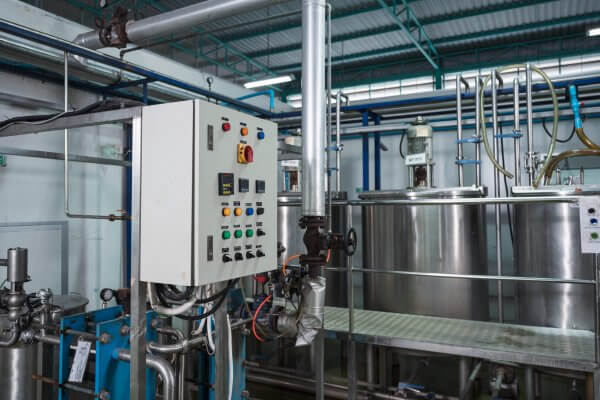
In vapor degreasing, the cleaning fluid is heated in a sump until it produces a stable vapor zone. Parts are lowered into that zone, the vapor condenses on cooler component surfaces, dissolves contaminants, and drips back into the sump clean.
The process leaves no residue, requires no aqueous rinse, and completely dries parts upon extraction. Lower boiling points suit sensitive substrates and light-duty cleaning, while higher boiling points provide more thermal energy for heavier soils.
Immersion Cleaning
In immersion cleaning, components are submerged directly in the cleaning fluid, which dissolves or displaces contaminants from the part’s surface. This method is well suited for complex geometries, blind holes, and assemblies where vapor condensation alone cannot reach all surfaces and is often combined with ultrasonic agitation for more thorough soil removal.
HFE fluids suit immersion cleaning because their low surface tension allows penetration into tight spaces, their broad material compatibility makes them safe for sensitive substrates, and their non-flammability eliminates the fire hazard associated with hydrocarbon immersion solvents.
Precision Cleaning Fluid Applications
Precision cleaning fluids are specified for manufacturing and maintenance environments where component-level contamination affects product performance, regulatory compliance, or patient and operator safety. That includes any process where a defined cleanliness standard must be met and validated before the component moves to the next stage.
Electronics Manufacturing
Printed circuit boards, electronic assemblies, and connectors require removal of flux residue, ionic contamination, and particulate that would compromise electrical performance or long-term reliability.

Semiconductor Fabrication
Wafer processing equipment and process chambers require a chemically inert, non-flammable fluid that meets the resistivity and contamination standards of semiconductor-grade cleaning.

Aerospace & Defense
Structural components, avionics assemblies, and precision mechanisms are cleaned to specifications that govern residue levels, material compatibility, and process validation under MIL and aerospace standards.

Medical Devices
Surgical instruments, implantable components, and diagnostic equipment require cleaning fluids that are low-toxicity, residue-free, and compatible with subsequent sterilization processes.

Optics
Lenses, mirrors, and optical assemblies require a cleaning fluid that removes contamination without scratching surfaces or leaving residue that would affect optical performance.

Archival
Documents, photographic materials, and sensitive media require a gentle, residue-free solvent that removes surface contamination without degrading the substrate or the information it carries.

Frequently Asked Questions About Precision Cleaning Fluids
What is precision cleaning?
Precision cleaning is the process of removing contamination from sensitive components to a defined, measurable standard using engineered fluids, with specifications governed by bodies including ASTM, ASD, MIL, and IPC. It is specified for any application where residue, ionic contamination, or particulate would compromise component performance or result in a failed regulatory audit.
How is precision cleaning different from general industrial cleaning?
General industrial cleaning removes visible contamination using aqueous detergents or solvent wipes. Precision cleaning removes contamination to a defined, measurable threshold that must be validated and documented against an industry-specific specification. The governing standards vary by industry:
- Electronics: IPC-7711/7721, J-STD-001
- Semiconductor: SEMI F57, SEMI C79
- Aerospace/Defense: MIL-PRF-680, applicable AMS specifications
- Medical devices: ISO 15223, FDA 21 CFR Part 820
How does HFE precision cleaning compare to aqueous cleaning?
Aqueous cleaning uses water-based detergents and requires drying steps that add time and energy to the process. It can cause corrosion on sensitive metals, is not viable for assemblies that cannot tolerate water, and can leave ionic residue if rinsing is incomplete.
HFE fluids evaporate completely on extraction, leaving no residue, requiring no drying step, and posing no corrosion risk. For sensitive substrates and complex geometries, HFE precision cleaning is the more reliable and efficient approach.
What is vapor degreasing?
Vapor degreasing heats a cleaning fluid to produce a stable vapor zone. Parts are lowered into the zone, the vapor condenses on cooler component surfaces, dissolves contaminants, and drips back into the sump clean. The process leaves no residue and completely dries parts during extraction, making it the preferred method for high-throughput precision cleaning of complex components.
Can HFE fluids be used with ultrasonic cleaning equipment?
Yes. HFE fluids are compatible with ultrasonic cleaning systems and work well with ultrasonic agitation in immersion cleaning applications. The ultrasonic energy enhances soil removal from complex geometries, blind holes, and tight tolerances where fluid penetration alone may not be sufficient.
Why are hydrofluoroether fluids used for precision cleaning?
Hydrofluoroether fluids replaced legacy chlorinated and hydrocarbon solvents because they deliver equivalent cleaning performance without flammability, carcinogenicity, or the regulatory burden those chemistries carried.
They are non-flammable, have no flash point, exhibit low toxicity, and are compatible with a broad range of metals, plastics, and elastomers. For industries operating under strict cleanliness and worker safety standards, HFE fluids are the established specification.
How do I choose the right precision cleaning fluid?
Boiling point determines the temperature of the vapor zone and the thermal energy available for soil removal. Lower boiling points suit sensitive substrates and light-duty cleaning, while higher boiling points provide more thermal energy for heavier soils and more demanding degreasing applications.
Material compatibility, soil type, and existing validation records also factor into the selection. If you’re not sure which fluid fits your application, contact our team and we’ll confirm the right match.
Do I need to revalidate my process when switching from Novec™ 7100, 7200, or 7300?
In most cases, the extent of revalidation depends on how your process documentation references the original fluid. If your validation records reference the CAS number rather than the 3M™ trade name, and the replacement fluid carries the same CAS number at equivalent or higher purity, revalidation requirements are typically minimal.
Are precision cleaning fluids PFAS?
Hydrofluoroether fluids contain carbon-fluorine bonds, which is the basis for the PFAS classification, and Standard Fluids’ products carry that classification. The PFAS compounds driving most regulatory action, PFOS and PFOA, bioaccumulate in tissue and persist in groundwater for decades, but hydrofluoroether fluids do not.
Hydrofluoroether fluids have substantially different environmental profiles: short atmospheric lifetimes, lower GWP than the legacy solvents they replaced, and no bioaccumulation, which is why they fall outside the core of current regulatory concern despite their shared classification. That distinction is what separates a qualified fluorochemical supplier from one working off a secondhand formula, and it’s exactly what our PFAS guide breaks down in more detail.
Why did 3M™ stop making Novec™ 7100, 7200, and 7300?
3M™ exited the entire fluorochemical market due to legal and regulatory pressure on a few specific molecules. The Novec™ products themselves were not the issue. The chemistry behind Novec™ 7100, 7200, and 7300 remains technically sound, environmentally sustainable, and is still distributed today by Standard Fluids Corporation™ as SF 7100™, SF 7200™, and SF 7300™.
Standard Fluids™ was founded by the original team that developed the chemistry, products, and applications at 3M™ and ensures its engineered fluids meet or exceed the quality standards that customers came to expect from legacy Novec™ products.
Engineered Fluids for Precision Cleaning
Standard Fluids supplies three hydrofluoroether fluids for precision cleaning applications, each validated to the original 3M™ specification and independently tested in a US-based ISO 9001-certified laboratory.
SF 7100™
SF 7100™ replaces 3M™ Novec™ 7100 for light-duty precision cleaning and vapor degreasing of sensitive substrates. Its 61°C boiling point and low surface tension make it well-suited to fast-drying applications.
SF 7200™
SF 7200™ replaces 3M™ Novec™ 7200 for vapor degreasing, semiconductor manufacturing, and film and media cleaning. Its 76°C boiling point provides greater thermal energy for heavier soil removal.
SF 7300™
SF 7300™ replaces 3M™ Novec™ 7300 for heavy-duty vapor degreasing and lubricant deposition applications. Its 98°C boiling point suits the most demanding degreasing processes.
Talk to Our Precision Cleaning Team
The right cleaning fluid starts with the right source. Contact our team, and we’ll confirm the best fit for your application, backed by the documentation your process requires.