

Skip to content

Immersion Cooling Fluids

As chip power and rack density outpace what air cooling and direct-to-chip liquid cooling can handle, immersion cooling has become the specification for facilities building toward higher density and lower energy consumption. Standard Fluids supplies the engineered heat-transfer fluids behind that transition, developed by the scientists and engineers who created the original 3M™ Novec™ product lines.

Immersion Cooling: A More Effective Cooling Method

Immersion cooling is a liquid cooling approach that submerges electronic components directly in a dielectric fluid, transferring heat from hardware to fluid rather than to circulated air.

Compared to conventional air and water cooling, it delivers higher heat-transfer efficiency, enables greater component density per rack, and eliminates the energy and water consumption associated with traditional cooling infrastructure. It is implemented in two configurations, each suited to different heat loads and application requirements.

Two-Phase Immersion Cooling

Two-phase immersion cooling submerges electronics in a low-boiling-point dielectric fluid. As components generate heat, the fluid vaporizes at their surfaces and rises to a condenser, where it returns to liquid and cycles back through the system.


This phase-change process transfers heat more efficiently than pump circulation, making two-phase immersion the preferred cooling method for high-density data centers and AI infrastructure. Fluoroketones, like Standard Fluids SF 649™, are the primary fluids for two-phase applications, carrying a GWP of 1, zero ozone depletion potential, and a five-day atmospheric lifetime.

Single-Phase Immersion Cooling

Single-phase immersion cooling keeps the dielectric fluid in liquid form throughout the process. Heat transfers directly from components to fluid, which circulates to an external heat exchanger before returning to the tank.

Single-phase systems suit industrial applications and moderate heat-load environments. The primary chemistries are hydrofluoroether and perfluorocarbon fluids, both chemically inert and non-flammable with high dielectric strength suited for direct contact with electronics across a broad operating temperature range.

Industrial Immersion Cooling Fluid Applications

Immersion cooling fluids are specified for environments where heat density, power consumption, or thermal stability requirements exceed what air cooling can deliver. That includes high-density computing infrastructure, power electronics, and other industrial applications where conventional cooling methods create operational constraints.

Data Centers

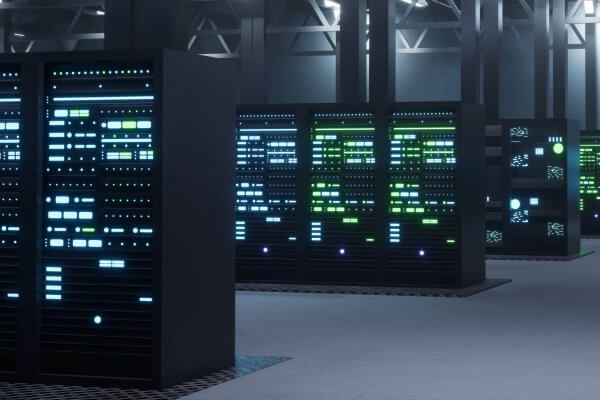
High-density server infrastructure and AI workloads generate heat loads that air cooling cannot manage at scale without significant energy and water consumption.

Supercomputing & HPC

High-performance computing systems require consistent thermal management that scales with processor output without the thermal throttling that limits air-cooled performance.

Edge Computing

Space-constrained edge deployments require high-density compute without dedicated cooling infrastructure, making immersion cooling the only viable thermal management approach.
Power Electronics

IGBTs, inverters, and transformers require a non-flammable, high-dielectric-strength fluid for direct contact thermal management across sustained high-power operation.

Lithium-Ion Batteries

Battery systems require precise thermal control across charge and discharge cycles to maintain performance and prevent thermal runaway.

Electronics Testing

Semiconductor fabrication, aerospace electronics, and medical device manufacturing require a chemically inert dielectric fluid for burn-in and hermetic seal testing.

Aerospace & Military

Radar systems, avionics, and defense electronics require thermal management fluids that perform across extreme temperature ranges without flammability risk.
Frequently Asked Questions About Immersion Cooling Fluids

Immersion cooling transfers heat directly from electronic components to a dielectric fluid, eliminating the need for fans, heat sinks, and raised-floor infrastructure that air cooling requires. It delivers significantly higher heat transfer efficiency than air cooling at any rack density.

Two-phase immersion cooling submerges electronics in a dielectric fluid with a low boiling point. As components generate heat, the fluid boils and vaporizes, carrying heat away as latent energy. The vapor rises to a condenser, returns to liquid, and cycles back through the system.

This phase-change process transfers heat far more efficiently than single-phase cooling, making two-phase immersion the most effective approach for high-density computing environments.

Single-phase immersion keeps the fluid in liquid form throughout, relying on pump circulation to move heat to an external exchanger. It is simpler to implement but less efficient at high heat loads. Direct-to-chip circulates coolant through cold plates attached to individual components without submerging electronics, offering targeted cooling but limited coverage across a full system while adding complexity and reliability risk.

Two-phase immersion handles the highest heat densities of the three approaches, without the need for pump circulation.  It offers the highest heat-transfer efficiency and scales with chip power in ways single-phase and direct-to-chip cannot match.

The primary alternatives are air cooling, direct-to-chip liquid cooling, and rear-door heat exchangers. Air cooling remains the most widely deployed approach, but it reaches practical limits at rack densities above 20-30 kW. Direct-to-chip addresses high-power processors but leaves other components air-cooled.

For facilities operating above 30 kW per rack or planning for next-generation GPU and AI workloads, immersion cooling is the only approach that scales without infrastructure compromise.

Immersion cooling handles heat loads that air cooling cannot manage at scale, reduces energy consumption by eliminating chillers and computer room air handlers, and enables higher component density per rack. It also extends hardware lifespan by maintaining consistent operating temperatures and eliminates water consumption in facilities that rely on evaporative cooling towers.

Most engineered immersion cooling fluids contain carbon-fluorine bonds, which is the basis for the PFAS classification, and Standard Fluids’ products carry that classification. The PFAS compounds driving most regulatory action, PFOS and PFOA, bioaccumulate in tissue and persist in groundwater for decades.

The fluorinated fluids used in immersion cooling have substantially different environmental profiles, with short atmospheric lifetimes, low or negligible GWP, and no bioaccumulation, which is why they sit outside the core of current regulatory concern despite the shared classification.

3M™ exited the fluorochemical market due to legal and regulatory pressure surrounding PFAS as a class. The products themselves were not the issue. Novec™ 649, Novec™ PF-5056, and the broader Novec™ product line remain technically and environmentally sound, and the molecules remain in production at scale. The team of scientists and engineers that developed the original 3M™ products built Standard Fluids to fill the supply gap left by 3M™.

Existing data centers are built around vertical racks and raised-floor air handling. Immersion cooling uses tanks, and neither single-phase nor two-phase configurations fit into that existing layout.

Data centers built for immersion from the start are more compact and require substantially less chiller capacity and air-handling infrastructure than equivalent air-cooled designs. Both configurations share that advantage, which is why immersion is increasingly the specification for new high-density builds.

The most important factors are chemical equivalence, purity standards, and testing infrastructure. A verified Novec™ replacement should carry the same CAS number as the original Novec™ fluid, be produced to at least equivalent purity, and ship with a batch-specific CoA from an independent laboratory. Standard Fluids was founded by the team that developed the original Novec™ product line and validates every batch to the same specification they helped write at 3M™.

The right fluid depends on your cooling approach, heat load, and application environment:

  • SF 649™ for two-phase immersion cooling in data centers, high-density computing environments, and lithium-ion battery thermal management
  • SF 5056™ for single-phase immersion cooling and as a nucleating additive in rigid polyurethane foam formulations
  • SF 7100™ for single-phase immersion cooling, electronics testing and cleaning, and aerospace and military thermal management

If you’re not sure which fluid fits your application, contact our team and we’ll confirm the right match.

Engineered Fluids for Immersion Cooling

Standard Fluids supplies three engineered fluids for immersion cooling applications, each validated to the original 3M™ specification and independently tested in a US-based ISO 9001-certified laboratory.

SF 649™

SF 649™ replaces 3M™ Novec™ 649 for two-phase immersion cooling in data centers, high-density computing environments, and lithium-ion battery thermal management applications.

SF 5056™

SF 5056™ replaces 3M™ Novec™ PF-5056 as a perfluorocarbon for single-phase immersion cooling and as a nucleating additive in rigid polyurethane foam formulations.

SF 7100™

SF 7100™ is a hydrofluoroether (HFE) fluid engineered for single-phase immersion cooling, electronics testing and cleaning, and aerospace and military thermal management.

Talk to Our Immersion Cooling Team

The right heat transfer fluid starts with the right source. Contact our team and we’ll confirm the best fit for your application, backed by the documentation your process requires.